

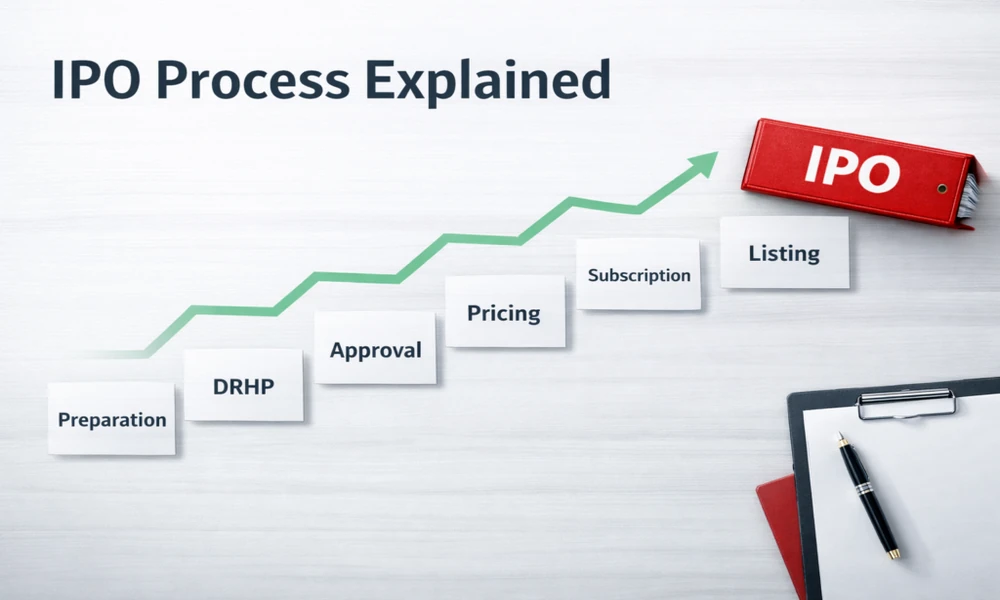
An Ipo Guide can help investors understand how a private company enters the public market and offers shares to eligible applicants. Public issues often attract attention because of subscription figures, known brands, listing expectations, and market discussion.
However, a popular issue is not automatically a suitable investment. Investors should review the company’s business model, revenue quality, profitability, cash flow, debt, management, issue purpose, and valuation before applying.
The following research plan explains how to evaluate a public issue systematically instead of relying only on market excitement.
Start by Decoding How the Company Makes Money
The first task is to understand what the company does.
Investors should be able to explain:
- Which products or services it provides
- Who its customers are
- How it earns revenue
- Which markets it serves
- Who its competitors are
- What regulations affect operations
A business should not be selected only because it belongs to a popular sector.
If the revenue model is difficult to understand, identifying the company’s main risks may also become difficult.
Place the Company Inside Its Industry Context
The company should be assessed within its operating environment.
Important industry factors may include:
- Market size
- Demand growth
- Competition
- Entry barriers
- Regulation
- Input costs
- Technology changes
A growing industry may support future expansion, but it can also attract competitors and reduce profit margins.
Investors should compare the company with established businesses operating in the same segment.
Revenue Growth Needs Both Scale and Sustainability
Revenue shows the money generated from normal business operations before expenses.
Investors should review whether growth is:
- Consistent across several years
- Supported by the core business
- Dependent on one customer
- Driven by acquisitions
- Seasonal
- Accompanied by cash collection
A sharp increase from a low base can appear impressive without confirming long-term stability.
The source and sustainability of revenue matter more than one high annual percentage.
Rising Sales Matter Only When Profits Follow
Rising sales should ideally support stronger profits.
Useful measures include:
- Operating profit
- Net profit
- Operating margin
- Net margin
- Earnings per share
- Return on equity
- Return on capital employed
If revenue rises while margins decline, the company may be facing cost pressure, competition, or weak pricing power.
For loss-making businesses, investors should assess whether the path to profitability is supported by measurable improvements.
Cash Generation Can Reveal What Profit Figures Miss
Reported profit does not always mean the company has generated equivalent cash.
Investors should compare:
- Net profit
- Operating cash flow
- Capital expenditure
- Free cash flow
- Cash balance
Repeated weak operating cash flow may indicate high receivables, rising inventory, or dependence on external funding.
Cash generation is important because it supports debt repayment, expansion, and long-term financial stability.
The Balance Sheet Must Support the Growth Story
Debt can support growth, but excessive borrowing can weaken the company.
Review:
- Total borrowings
- Debt-to-equity ratio
- Interest expense
- Repayment schedule
- Interest coverage
- Available cash
Investors should also check whether the company plans to use issue proceeds to reduce debt.
Debt repayment may improve the balance sheet, but the business must still generate sustainable earnings after listing.
The Offer Document Is the Core Research Source
The offer document contains detailed information about the company and issue.
Important sections include:
- Business overview
- Financial statements
- Risk factors
- Management details
- Promoter information
- Legal proceedings
- Use of proceeds
- Issue structure
A brief platform summary may simplify the information, but it can omit important context.
Investors should use the official document as the primary research source.
Know Who Receives the Money Raised
A public issue may include:
Fresh Issue
The company issues new shares and receives the capital raised.
Offer for Sale
Existing shareholders sell part of their holdings and receive the proceeds.
Combined Issue
The offer includes both new shares and shareholder sales.
Investors should determine how much money is entering the business and how much is being received by existing owners.
A large offer-for-sale component is not automatically negative, but it should be reviewed carefully.
Follow the Planned Use of IPO Proceeds
The company may use issue proceeds for:
- Capacity expansion
- Debt repayment
- Working capital
- Technology upgrades
- New facilities
- Acquisitions
- General corporate purposes
Investors should examine whether the proposed spending can improve revenue, efficiency, or financial stability.
Broad or unclear use-of-funds descriptions may require additional review.
Expansion plans should also be compared with market demand and management’s execution history.
Public Capital Depends on Management Discipline
Management will decide how public capital is used.
Investors should evaluate:
- Leadership experience
- Industry knowledge
- Capital-allocation record
- Governance history
- Related-party transactions
- Promoter ownership
- Legal matters
Consistent disclosures and responsible capital use can support confidence.
Frequent strategy changes, unusual transactions, or unclear communication may require caution.
Growth Potential Should Be Read Alongside Downside Risk
Every public issue contains risks.
Common areas include:
- Customer concentration
- Supplier dependence
- Regulatory action
- High debt
- Legal disputes
- Currency exposure
- Commodity-price changes
- Promoter dependence
- Technology disruption
The investor should focus on risks that could materially affect revenue, profit, cash flow, or business continuity.
Growth potential should always be considered together with downside risk.
The Issue Price Must Justify the Business Quality
A financially strong company may still be unsuitable if the issue price is excessive.
Common valuation measures include:
- Price-to-earnings ratio
- Price-to-sales ratio
- Price-to-book ratio
- Enterprise value
- Market capitalisation
The appropriate measure depends on the business and profitability.
Peer comparison should account for differences in growth, margins, debt, scale, and return ratios.
A premium valuation requires strong execution after listing.
Choose Comparable Listed Peers, Not Convenient Ones
Investors may compare the issue with relevant Bse Stocks operating in the same sector or following similar business models.
The comparison should cover:
- Revenue growth
- Profit margins
- Debt
- Return ratios
- Market valuation
- Competitive position
An exchange-listed peer may have a longer public record, making comparison easier.
However, investors should avoid comparing companies from unrelated industries only because their market values appear similar.
Translate the Price Band Into Portfolio Exposure
The price band defines the range within which applicants may submit bids.
Investors should calculate:
- Minimum amount per lot
- Total amount required
- Number of lots considered
- Percentage of portfolio affected
- Potential downside after listing
The maximum affordable application is not always the most suitable one.
Application size should remain proportionate to the investor’s total portfolio and risk capacity.
Subscription Demand Is Interest, Not Investment Proof
Subscription figures show demand across different investor categories.
They may include:
- Institutional participation
- Non-institutional demand
- Retail applications
- Employee quota
- Shareholder quota
High subscription may indicate strong interest, but it does not confirm fair valuation or long-term quality.
Demand may be influenced by market sentiment, issue size, funding availability, or listing expectations.
Unofficial Premiums Can Distort the Research Process
Unofficial premium discussions may attract attention before listing.
However, these signals may change quickly and may lack transparency.
They should not replace:
- Business research
- Financial analysis
- Valuation
- Risk assessment
- Portfolio planning
An expected listing gain is not guaranteed.
Market conditions can change before trading begins.
Application Accuracy Determines Whether the Bid Is Valid
Before submitting an application, investors should confirm:
- Identification details
- Bank account
- Investor category
- Number of lots
- Bid price
- Payment mandate
- Closing date
Incorrect information may result in rejection.
Payment approval should be completed only through authorised channels.
Sensitive account details should never be shared with unknown individuals offering assistance.
Blocked Funds Need Their Own Liquidity Plan
The application amount may remain blocked until the allotment process is completed.
During this period, the money may not be available for other expenses or investments.
Investors should ensure that sufficient balance remains in the linked account.
If no shares are allotted, the blocked amount is generally released according to the applicable process.
Any unusual delay should be reported through official support channels.
Build the Plan Around All Three Allotment Possibilities
An applicant may receive:
- Full allotment
- Partial allotment
- No allotment
The outcome depends on subscription levels, category rules, issue size, and application validity.
Investors should not assume that submitting an application guarantees shares.
The allotment result should be checked through authorised sources.
Decide the Listing-Day Strategy Before Trading Begins
Before listing day, the investor should decide whether the objective is:
- Short-term listing participation
- Medium-term holding
- Long-term ownership
- Sector allocation
The exit decision should not be made only after seeing the opening price.
A strong opening can reverse quickly, while a weak listing does not automatically mean the company lacks long-term potential.
Post-Listing Execution Must Match the IPO Promise
After listing, investors should review:
- Quarterly results
- Revenue growth
- Margin trends
- Cash flow
- Debt
- Use of issue proceeds
- Management commentary
- Corporate announcements
The original thesis should be compared with actual execution.
A company should not be held indefinitely only because it was acquired through the public issue.
A New Allotment Can Quietly Increase Portfolio Risk
A successful allotment may increase exposure to a sector already present in the portfolio.
Investors should review combined allocation across:
- Company
- Sector
- Market-cap category
- Business theme
- Newly listed shares
Multiple public-issue holdings do not automatically create diversification.
Each position should have a defined role.
Listing Gains Look Different After Every Cost
Post-listing transactions may involve:
- Brokerage
- Exchange fees
- Taxes
- Stamp duty
- Depository charges
- Bid-ask spreads
A small listing gain may become less meaningful after all charges are included.
Investors should calculate net returns rather than relying only on the difference between issue and selling prices.
The IPO Platform Should Simplify, Not Influence
Before using a Market Trading App, investors should compare application security, issue information, payment-mandate support, allotment updates, order reliability, charges, statements, and customer assistance.
The platform should simplify the process without encouraging decisions based only on subscription figures or popularity indicators.
Official documents and exchange disclosures should remain the main information sources.
Conclusion
An Ipo Guide should help investors follow a complete research process rather than focus only on listing expectations.
The business model, financial performance, debt, cash flow, management, issue structure, use of proceeds, valuation, and risks should all be examined before applying. Application size, allotment uncertainty, and post-listing portfolio concentration also require attention.
A clear objective and documented review plan can help investors approach public issues with greater discipline and realistic expectations.
Frequently Asked Questions
1. Does high subscription guarantee a profitable listing?
No. Listing performance also depends on valuation, market conditions, issue size, and business quality.
2. What is the difference between a fresh issue and an offer for sale?
A fresh issue raises new money for the company, while an offer for sale allows existing shareholders to sell their holdings.
3. Should investors rely on unofficial premium information?
No. It may change rapidly and does not replace financial, business, and valuation analysis.
4. Can incorrect application details cause rejection?
Yes. Errors in identification, banking, bid, or payment-mandate information may result in rejection.
5. What should investors monitor after listing?
They should review financial results, debt, cash flow, use of proceeds, management execution, valuation, and major corporate disclosures.