

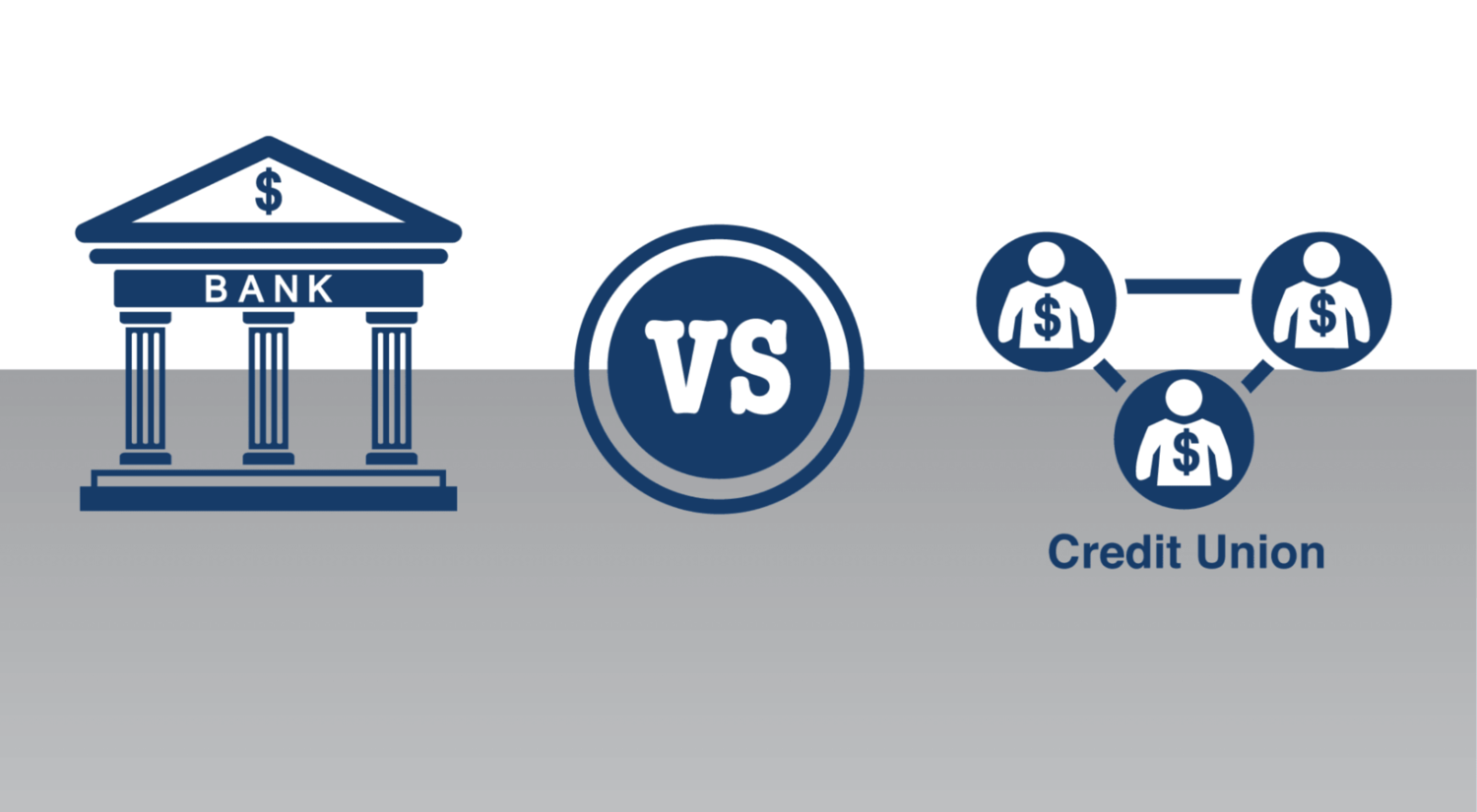
A bank and a Credit Union look similar in several ways. However, there are some differences between them. Understand the basic Credit Union vs bank difference through this guide and make an informed decision based on that. In general services, both offer checking and saving accounts as well as many loan options. Now, let’s discuss how a credit union varies from a typical bank, and what it is exactly.
There are several significant differences between banks and credit unions, despite the fact that they both offer comparable services.
Make the best choices for your family by knowing the distinctions between traditional banks and credit unions.
Profit vs Non-Profit
Banks and credit unions are different from one another in terms of their profitability. Credit unions are nonprofit organisations, whereas banks are for-profit businesses that are either privately held or publicly traded. Each type of institution delivers different goods and services because of this distinction between for-profit and non-profit organisations. The credit union is a cooperative in nature owned by its members. It offers open membership to individuals who share a common bond such as the industry in which they are working, the community they live in, their faith or their membership in another organization.
Furthermore, credit unions are typically exempt from federal taxes due to their nonprofit status, and some even get subsidies from the organisations with which they are linked. As a result, credit unions are not concerned with turning a profit for their investors.
The goal of the credit union is to offer its members the best possible conditions for their financial goods. As a result, members typically receive better APYs on savings products, pay fewer (and lower) fees, and have lower lending rates than bank clients. Banks are not particularly concerned with the requirements of their customers; instead, they are focused on turning a profit. This is one of the reasons why banks frequently demand higher fees and rates than credit unions. Banks often offer lower annual percentage yields (APYs) on savings products and higher lending interest rates.
Advantages of Credit Unions over Banks
- Lower Fees and Requirements: Compared to banks, credit unions usually provide more freedom and lower fees. For instance, credit unions are more likely than banks to provide checking accounts with no minimum balance requirements or monthly maintenance costs.
- Better Loan and Savings Account Rates: Credit unions provide lower interest rates on loans and greater interest rates on savings accounts, which is exactly what customers desire. While lower interest rates on loans make borrowing money more affordable, higher interest rates on bank accounts help your money grow more quickly.
- Dedicated Customer Support: Credit unions typically offer better customer service since they are smaller and dedicated to serving their members rather than investors. Representatives from credit unions will probably provide you with individualised attention and assist you in determining which services best suit your needs, something that big banks frequently fail to do.
Pros and Cons
Which type of financial institution—a bank or a credit union—will be more suitable for you and your family?
Banks
Pros
- DIC-insured accounts up to $250,000.
- Convenience.
- Financial technology.
- More branches and ATMs, probably, and a wider range of products & services.
Cons
- More and higher fees.
- May offer savings vehicles with lower APYs.
- Higher loan interest.
Credit Unions
Pros
- May offer lower loan interest rates.
- Higher APYs on savings vehicles.
- Lower fees.
- Incredible customer service and financial education.
- NCUA-insured accounts up to $250,000.
Cons
- Fewer branches and ATMs.
- Limited financial technology access.
- Offer fewer products.
- Requirements for membership eligibility.
Now you can make the right decision based on these points and your preferences and requirements.