


To choose the best CA firm in Chennai, ask twelve direct questions before you sign anything. Check ICAI credentials, partner involvement, industry depth, audit thresholds, fee clarity, and response speed on notices. The answers separate a compliance vendor from a growth partner. This guide gives you all twelve, with the specific facts each answer should contain.
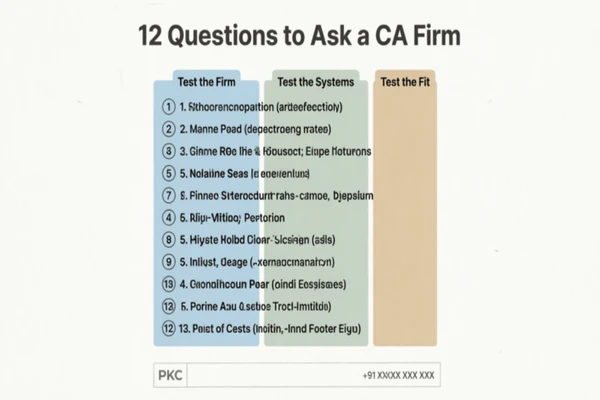
The 12 questions at a glance
- Are your partners registered with ICAI and active on my account?
- Do you handle audit, tax, and advisory under one roof?
- Who exactly will work on my business each month?
- Have you worked in my industry before?
- Which audit thresholds apply to my business?
- How will you manage my GST alongside income tax?
- What happens when I receive a tax notice?
- How do you track my deadlines through the year?
- What technology stack do you run?
- Can you scale with me when I raise funds or expand?
- How do you price, and what sits outside the quote?
- Can you show me references and measured outcomes?
The first four test the firm, the middle four test its systems, and the last four test the fit. Audit firms in Chennai that clear all twelve are rare, and that is the point.
1. Are your partners registered with ICAI and active on my account?
The firm must hold current ICAI membership and a partner should review your file every month.
Ask for the firm registration number and the membership numbers of the signing partners, then verify them on the ICAI portal. Every audit report and certificate a chartered accountant signs must carry a UDIN, which ICAI made mandatory in 2019, and you can validate any UDIN online in under a minute. Also ask how often a partner personally reviews your account. Chennai has hundreds of registered firms, and the gap between a good one and a poor one usually comes down to partner attention.
Why it matters: you avoid paying partner rates for work no partner ever sees.
2. Do you handle audit, tax, and advisory under one roof?
An integrated firm gives you one brief, one working file, and advice that connects compliance to strategy.
Split providers create split advice. Your auditor spots a stock control problem, your tax adviser never hears about it, and your consultant rebuilds the process without the numbers. Note one legal boundary here. Section 144 of the Companies Act 2013 bars your statutory auditor from also providing services like internal audit and bookkeeping to the same company. So ask the firm how it separates those roles across engagements. A firm that explains the boundary clearly understands independence. A firm that waves the question away does not.
Why it matters: you brief one team once, and every service line works from the same numbers.
3. Who exactly will work on my business each month?
Get named people, their qualifications, and a written escalation path before you sign.
Many firms pitch with partners and deliver with trainees. Ask for the team structure on your account, how many clients each account lead handles, and the review cadence. A healthy setup pairs a qualified CA as your single contact with article assistants for fieldwork and a partner review on every deliverable. Ask what happens when your account lead goes on leave during a filing month. The answer reveals how much process sits behind the pitch.
Why it matters: continuity on your account decides how much time you spend repeating yourself.
4. Have you worked in my industry before?
Industry depth shows up in the first meeting, so test it with one specific question from your business.
A retailer in T Nagar needs a firm that understands inventory shrinkage and multi store cash controls. A manufacturer in Ambattur or Sriperumbudur needs work in progress valuation and vendor compliance. An IT services company on OMR needs transfer pricing and export documentation. Ask the firm to name three clients in your sector and describe one problem it solved for each. The best CA firm in Chennai for a hospital chain may be the wrong firm for a startup, so match depth to your sector rather than brand size.
Why it matters: sector fluency shortens every conversation you will ever have with the firm.
5. Which audit thresholds apply to my business?
A capable firm answers this instantly with sections and numbers, not a promise to check.
Every company registered under the Companies Act 2013 needs a statutory audit regardless of turnover. A tax audit under Section 44AB of the Income Tax Act applies once business turnover crosses Rs 1 crore, and the limit rises to Rs 10 crore when cash receipts and cash payments each stay within 5 percent of the total. Internal audit under Section 138 applies to listed companies and to larger unlisted ones based on capital, turnover, and borrowings. Put your numbers on the table and watch how quickly the firm maps them to obligations.
Why it matters: a firm that hesitates on thresholds will hesitate on everything else.
6. How will you manage my GST alongside income tax?
Insist on one reconciled working file that ties GSTR 1, GSTR 3B, your books, and your income tax return together.
In Tamil Nadu, GST registration applies from Rs 40 lakh turnover for goods and Rs 20 lakh for services. After that, GSTR 1 falls due by the 11th of each month and GSTR 3B by the 20th, with GSTR 9 closing the year. Most GST notices start as mismatches between these returns and your books or your 26AS data. Ask the firm to walk you through its monthly reconciliation routine. If GST and income tax sit with two teams that never compare numbers, you are the one who pays for the gap.
Why it matters: reconciliation done monthly costs minutes, while mismatches found by the department cost lakhs.
7. What happens when I receive a tax notice?
Ask for a written response time commitment, because notice deadlines run with or without you.
Intimations under Section 143(1), reassessment notices under Section 148, and GST demands under DRC 01 all carry short reply windows, often 15 to 30 days. A serious firm acknowledges a notice within one working day, assigns an owner, and shares a draft response plan within the week. Ask the firm how many scrutiny and appeal matters it handled in the last year and at which forums. Representation experience before Chennai assessing officers and appellate authorities is a different skill from filing returns.
Why it matters: the quality of your first reply often decides how long a notice follows you.
8. How do you track my deadlines through the year?
Ask to see the firm’s compliance calendar for a client like you before you sign anything.
A single private limited company can face advance tax on 15 June, 15 September, 15 December, and 15 March, quarterly TDS returns, monthly GST filings, AOC 4 within 30 days of the AGM, and MGT 7 within 60 days. Missed dates convert straight into interest and late fees. Ask how the firm tracks all of this. The good ones run a shared calendar, send reminders before due dates, and confirm completion after. The weak ones wait for you to call in the last week of a deadline month.
Why it matters: every deadline the firm tracks for you is a penalty you never pay.
9. What technology stack do you run?
The firm should work inside your accounting software and hand you dashboards, not annual surprises.
Ask which platforms the team supports day to day. Tally, Zoho Books, and QuickBooks cover most Chennai businesses, and the firm should be fluent in yours rather than exporting everything to spreadsheets. Then ask about delivery. Do MIS reports arrive monthly without a reminder? Is there a shared document vault instead of email chains? Firms that invested in automation make fewer manual errors and answer faster, and the difference shows within your first quarter.
Why it matters: your visibility into your own numbers depends on the tools your firm runs.
10. Can you scale with me when I raise funds or expand?
Hire for the business you plan to run in three years, not just the one you run today.
Growth changes your needs fast. A funding round brings due diligence and valuation work. A new subsidiary abroad brings FEMA compliance. An acquisition brings tax structuring. Ask which of these the firm has done for clients your size, and ask about outsourced CFO support for the stage between an accountant and a full time finance head. Switching firms mid growth is expensive, so test the ceiling before you hit it.
Why it matters: a firm you outgrow in two years costs you a second onboarding at the worst possible time.
11. How do you price, and what sits outside the quote?
Get the scope in writing, with excluded items listed just as clearly as included ones.
Chennai pricing runs from basic compliance packages near Rs 6,999 a month to substantial retainers for integrated audit, tax, and advisory work. The number matters less than the boundary. Common extras include scrutiny representation, net worth and turnover certificates, bank certifications, and revised filings caused by late documents. Ask for last year’s invoices for a comparable client with names removed. A firm confident in its pricing will show you. A firm that keeps scope vague is planning to bill the gaps.
Why it matters: surprise invoices damage the relationship faster than any fee level does.
12. Can you show me references and measured outcomes?
Ask for two client references in your sector and one number the firm improved for each.
Testimonials on a website are curated. A phone call with a current client is not. Ask each reference how the firm performs in March, how notices were handled, and what they would change. Then ask the firm for measured outcomes, such as tax saved through planning, working capital released through stock controls, or penalties avoided through clean filings. Firms that measure outcomes talk in numbers without prompting, and that habit is exactly what you want reviewing your accounts.
Why it matters: past clients predict your experience better than any proposal document.
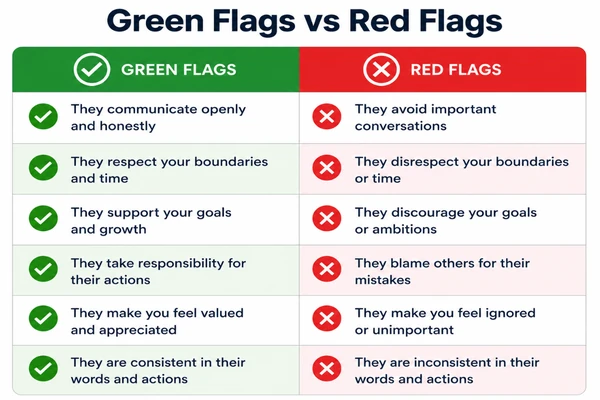
Green flags and red flags at a glance
| What to check | Green flag | Red flag |
|---|---|---|
| Credentials | ICAI numbers offered upfront, UDIN on every certificate | Vague titles like tax expert with no membership number |
| Team | Named account lead, partner review each month | Partner appears only in the sales meeting |
| Thresholds | Quotes Section 44AB and GST limits from memory | Promises to check and revert |
| Deadlines | Shared compliance calendar with reminders | You chase the firm every filing month |
| Fees | Written scope with exclusions listed | One line quote, extras billed later |
| Proof | References plus measured client outcomes | Website testimonials only |
How PKC Management Consulting Helps
PKC Management Consulting has answered these twelve questions for 37 years. The firm runs audit, tax, and management consulting under one roof from Purasaiwakkam, with a 200+ member team serving more than 1,500 clients, including Pothys, The Chennai Silks, Indian Oil LNG, Otto Clothing, and Prashanth Hospitals. If you searched for a tax consultant near me and landed here, the fastest way to test us is the same checklist above. Bring your numbers, ask all twelve questions, and compare our answers with any other firm on your shortlist. Book a free 30 minute consultation on +91 91761 00095 and put us on the spot.
Frequently Asked Questions
How do I choose the best CA firm in Chennai for my business?
Shortlist firms with valid ICAI registration, partner involvement, and experience in your industry. Then ask the 12 questions in this guide, covering fees, technology, deadlines, and notice handling. The firm that answers with specifics, not promises, is usually the right choice for your business.
What questions should I ask a CA firm before hiring them?
Ask who works on your account, which audit thresholds apply to you, how they manage GST and income tax together, how fast they respond to notices, and what sits outside the quoted fee. Also request two client references with measurable results before you commit to anything.
How much do CA firms in Chennai charge?
Fees vary with turnover and scope. Basic compliance packages in Chennai start near Rs 6,999 a month, while integrated audit, tax, and advisory retainers for growing companies cost more. Always ask for a written scope so you know which certifications and representations are billed separately.
What is the difference between a tax consultant and a CA firm?
Anyone can call themselves a tax consultant. A CA firm is registered with ICAI, its partners hold certificates of practice, and only its chartered accountants can sign audit reports and certifications with a UDIN. For audits, appeals, and bank certifications, you need a CA firm.
Do audit firms in Chennai handle GST and income tax together?
The better ones do. Integrated firms reconcile your GSTR 3B, GSTR 1, books, and income tax return from one working file, which prevents the mismatches that trigger notices. Ask the firm to show you how its GST and income tax teams share data before you sign.
How fast should a CA firm reply to a tax notice?
Expect acknowledgement within one working day and a draft response plan within three to five working days, since most income tax and GST notices carry reply windows of 15 to 30 days. Ask every firm you interview for a written response time commitment on notices.
Closing
The best CA firm in Chennai for your business is the one that answers all twelve questions with specifics. Print this list, book three meetings, and score the answers.
Then call PKC Management Consulting on +91 91761 00095 and let us take the same test.